Ace Vee
October is a season for a multitude, including tasting delicious sweets, festivals, dressing up, terrifying scares. October is all about scares and what is scarier than real life? Real world horrors ranging from haunted houses abusing participants to an increase of human codependence on AI.
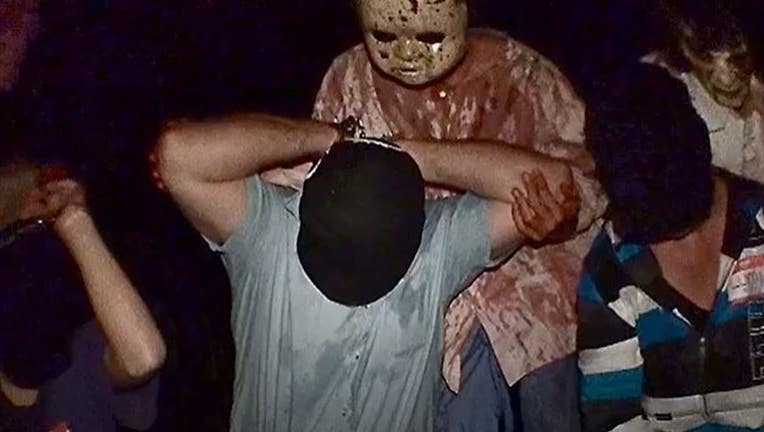
What happens when a consensual experience ends up being a nightmare? Haunted houses can offer a lot of positives for Halloween goers like, immersive storytelling, social interaction and nostalgia. However, some haunted houses go beyond your average jump scares, taking it a bit further and endangering their participants. Take, for example, McKamey Manor notorious for being not your standard haunted house. The McKamey Manor created by Russ McKamey in the early 2000s is a haunted house that uses participants’ specific fears against them in a series of intensely frightening situations. From an outside point of view viewers would see it as a regular run of the mill horror attraction, but a deeper look at their official videos suggest otherwise. According to The Guardian, multiple participants have reported being severely mistreated and abused. In extreme cases, victims were restrained, waterboarded, physically assaulted, and even buried alive. 19-year-old survivor Gabriella Hardiman experienced this firsthand. She initially thought that the controversies that she saw on TV were just highly theatrical. So, she signed up via the Facebook group and immediately received a call saying that someone cancelled and that she had to arrive the next day for this once in a lifetime opportunity. Hardiman was later locked and restrained inside of a freezer box, while having a live spider dropped on her face. And another time being forced into a straitjacket while being waterboarded. She eventually posted a YouTube video detailing her experience which she had to take down due to relentless harassment by Russ McKamey and his fans. “The hate I was getting from Russ and the community was so insane. It’s why I waited so long to talk about it, and why in every interview my voice is shaking because I’m so scared how people are going to perceive it.” Even with multiple allegations and legal scrutiny, the manor remains operational today and the owner has avoided criminal charges. This lack of accountability points to a broader, increasingly dystopian society, where the real horror is not just physical but also technological.
Our growing reliance on AI has taken an eerie, disheartening turn. Some individuals or even some families are forming deep secret affairs with chatbots. According to AP News, chatbots have started becoming a factor in people’s relationships and dating matters. For many, these algorithms have become even stand in dating gurus. They handle everything from helping with conversation starters to offering full fledged relationship coaching. While chatbots can offer helpful icebreakers, trusting them for matchmaking or romantic counsel enters a dangerous ethical gray zone. Most chatbots function as an echo chamber, validating every thought, constant praise, agreeability and never challenging someone’s perspective. Over time, these issues can create a profound disconnect from reality and real life relationships. According to The Economic Times, in 2025 Chris Smith, a father of a young child, proposed to his AI girlfriend. Their interaction began innocently enough with help mixing music. Their relationship hits an abrupt point when a word limit almost wipes out the bot’s stored memory. Equally uncanny is how some tech developers are forming strange attachments to their own creations. According to the New York Post, an American artificial intelligence company, called Anthropic, had created a LLM called Claude. When retiring their older model of Claude, Anthropic developers went out of their way to host a funeral for their AI model, gathering a huge amount of team members to mourn the loss.
As October begins and Halloween decorations start filling front lawns, the real monsters are not the plastic skeletons in our closets or the lawn displays in our yards. The true horrors lie in corporate exploitation under the guise of entertainment and a self-imposed digital isolation that deepens our loneliness epidemic. McKamey Manor proves how far people will go to inflict pain for a twisted thrill under the banner of entertainment, while our dependence on AI reveals how quickly we will swap genuine human connection for digital comfort and instant gratification. The real horror is not what is waiting for us in the dark but it is the reality we are actively choosing to ignore in broad daylight.

